
William Mooney Gardens
Alan and Brenda Abbey
1023 William Mooney Rd.
Carp, ON K0A 1L0
839–1349 (evenings)
<hortman@xplornet.com>
What they Grow: About 30 varieties of tomatoes, 10 peppers, 10 squash, cucumber melons, tomatillos, purple potatoes, carrots, assorted greens, garlic, raspberries (including “Fall Gold”, which produces a second crop of gold raspberries in the fall), strawberries, elderberries, asparagus, perennials and shrubs
Almost all vegetables are open-pollinated heirloom/heritage varieties and organically grown.
Where They Sell: The Red Apron (‘Sophisticated Comfort Food’), and the Experimental Market at Carleton University. Possibly also the Stittsville market this summer. Farm gate sales (call ahead)
In my interactions with growers around this area, I am beginning to recognize the signs of COGS (Compulsive Organic Grower’s Syndrome, not to be confused with COG — Canadian Organic Growers). A few moments into a conversation and the signs start showing. The individuals display a contagious enthusiasm about growing and eating healthy food, a plethora of farming/garden magazines in their home environment, a growing proportion of household (and mental) space that is occupied by garden-related activity/information, excitement over heritage seeds and the compulsion to share them freely, the stamina to come home from jobs to spend their spare time planning or tending a garden, a compulsion also to spread the Good Food News to neighbors and friends, and finally, an insatiable appetite to consider and learn about how things are inter-connected (food systems as they relate to climate change, local food production and local economies, soil health related to plant vitality…)
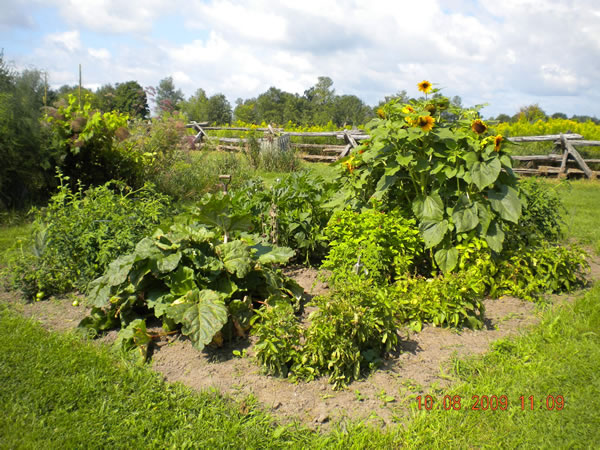
Alan and Brenda Abbey could quite possibly have fallen victim to COGS. Three years ago, they moved to their two-acre home near Carp after living for fifteen years in Kanata. Unlike the other lawn-clad lots that line the road they now live on, the Abbey’s backyard is home to a big ½ acre vegetable garden. These days (end of March) it is still frozen and muddy out there, but in several weeks it will be home to a host of lettuces, herbs, heritage varieties of tomatoes, squashes, raspberries, peppers, beans (for drying), and more. This will be the third growing season for the Abbeys, and in true COGS style, their anticipation for the coming season is palpable.
In the beginning, their focus was primarily to grow good, healthy food for their family and friends. Over the last couple of years they have begun developing a clientele for their produce, selling to The Red Apron (on Gladstone in Ottawa), and at the Experimental Farmers Market at Carleton University (started last summer by Carleton students). The public interest and demand for local, organic food has risen exponentially over the last several years and the Abbeys have plans to bump up volume and sales in the coming years, with thoughts of adding a high-tunnel, developing a website to help with direct sales, and partnering with more local restaurants. Mind you, until they retire, all of it has to be done in their “off hours”. So with limited time, variety has taken precedence over volume, and open-pollinated, heirloom seeds are a going concern at their place. Not surprisingly, Alan is into cooking, so growing unusual varieties of veggies is something he’s keen on, and from the sound of it their customers love it too. This year’s new additions to the garden include tomatoes with names like Chocolate Cherry, Orange Strawberry, Nyageous, and Hillbillly.
Food and agriculture is in Alan’s blood. He grew up on a farm near Dunedin, north of Toronto. His grandfather was a woodsman who ran the local sawmill, and his father farmed. He remembers their family vegetable garden fondly. After studying horticulture at Guelph, he worked at the Royal Botanical Gardens in Hamilton for 5 years before moving to Ottawa to teach horticulture. He met Brenda (weeder and bug-picker extraordinaire) and they lived for a couple of years on a rented 200-acre farm in the area where they started growing vegetables for their own use. They soon relocated to Kanata with a 2 year-old child to be closer to work, schools, and activities. Brenda commented how the shift from country to the suburbs affected them. They were stunned that the whole street (except them) would blindly spray their lawns with chemicals. On “spray-days” Brenda was immediately afflicted with a headache. Slowly, neighbours took note of Alan’s great, chemical-free lawn — realizing that perhaps those toxins might have a negative effect on pets, humans, and the environment and that they weren’t necessary to a healthy lawn (in fact, they were detrimental to soil health). Many people followed the Abbey’s lead.
When it comes to growing and eating food, both Alan and Brenda are advocates for access to good information, setting good examples, and making healthy options possible to people, particularly youth and young adults. Brenda works with youth in Ottawa and she emphasized to me the connections between their involvement in food production/preparation and healthy eating habits — and the need for programs that encourage this. Both the Abbeys are amazed by the lack of connection being made between what’s available in school (and other) cafeterias — fries and processed everything being the norm — and poor health. In his years of teaching horticulture at Sir Guy Carleton, a vocational high school in Ottawa, Alan has been instrumental in creating opportunities for students to work on organic farms as part of the program — helping to highlight the connections between our food, where it comes from, how it is grown, and its impact on our health and the planet’s. He’s also advocated the removal of vending machines from the cafeteria, and getting french fries off the cafeteria menu on Wednesdays (it’s a start!). He astonished me by saying that only about 6 to 10 kids who eat in the cafeteria each day actually bring their lunch. Most have $3–4 to spend for lunch and, by and large, it is spent on junk food.
As with many passionate gardeners/farmers (COGS-afflicted or otherwise), information becomes both empowering and revelatory. Though their market garden is fairly new, the Abbey’s explorations have already led to alternative practices such as companion planting, crop rotations, the use of trap crops (to bait unwanted pests), and to them valuing the preservation of genetic diversity through the use of heritage seeds. If all this can happen in a couple of years, while holding down two full-time jobs, I wonder what the possibilities could be when they’re “retired”!
Habanero Hot Sauce
4-5 fresh orange habanero peppers finely chopped (with seeds)
2 c. white vinegar
6-7 red jalepeno finely chopped (with seeds)
2 cloves garlic chopped
1/4 Tsp. ground oregano
1/4 Tsp. ground cumin
1/2 Tsp. onion powder
Salt to taste
Freshly ground black pepper to taste
1/2 Tsp. mustard powder
Put all ingredients in a blender on high, blend until smooth. Add the sauce to a saucepan and bring to a boil. Reduce heat and simmer for about 15 minutes. Season to taste with salt and pepper. Add to a jar and refrigerate. The longer it is stored the stronger it becomes. Try your own variations and enjoy!